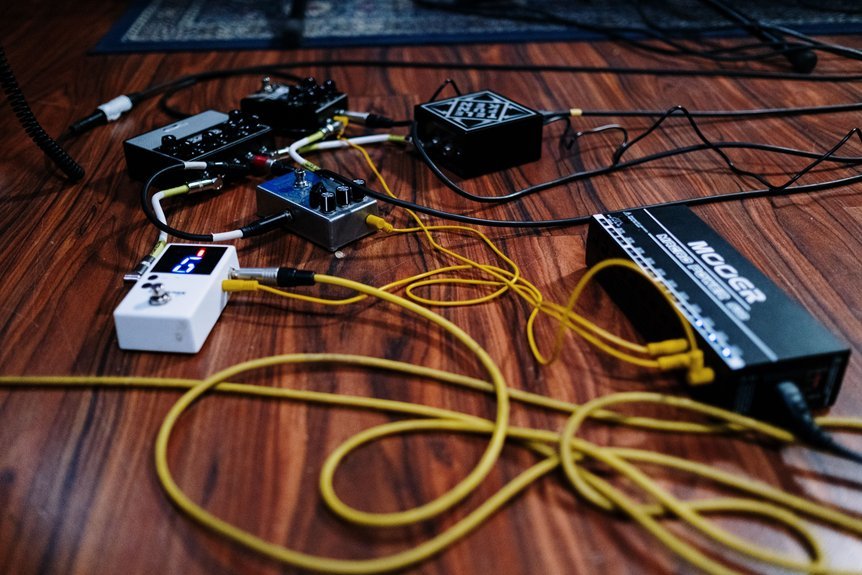
A Rocksmith cable alternative means any method that links a guitar to a computer or console to play along with Rocksmith without the official USB cable. Options range from wired USB adapters to audio interfaces and even wireless or software-based setups. Each choice has trade-offs in latency, sound quality, and reliability. The goal is stable, low-latency performance across platforms. The consequences of those choices matter, and the next step reveals how to weigh them against practical needs.
What Counts as a Rocksmith Cable Alternative
A Rocksmith cable alternative refers to any method or device that lets a guitarist connect a guitar to a computer or gaming console to play along with Rocksmith without using the official Rocksmith USB cable.
A rocksmith alternative includes various guitar adapters and wireless solutions, focusing on PC compatibility, reduced wireless latency, and reliable performance for accurate gameplay.
How Wired USB Adapters Compare to Audio Interfaces
Wired USB adapters and audio interfaces both provide routes for connecting a guitar to a computer or console, but they serve different design goals and performance profiles. USB adapters emphasize portability and simplicity, often trading some studio-grade impedance and latency headroom. Latency testing shows interfaces can deliver lower round-trip delays; adapters may vary.
When to Choose Bluetooth or Software-Based Solutions
Bluetooth and software-based solutions offer flexible, low-cost options for guitar-to-computer setups, but their suitability hinges on latency tolerance, reliability, and use-case scenarios. They excel when mobility and simplicity trump absolute precision. Consider latency benchmarks and compatibility considerations to determine fit; they may suit casual practice yet misalign with real-time, high-precision tasks. Evaluate environment, devices, and software ecosystems before committing.
How to Evaluate Latency, Sound Quality, and Reliability
To evaluate latency, sound quality, and reliability effectively, one should establish objective benchmarks, repeatable test conditions, and documented tolerances that align with the intended use.
Objective comparisons rely on latency benchmarks and perceptual tests for audio fidelity.
Reliability metrics capture dropout, jitter, and failure rates.
A disciplined protocol ensures consistent results, enabling informed decisions about Rocksmith cable alternatives and overall system viability.
Frequently Asked Questions
Do Rocksmith Alternatives Work With All Guitar Models?
Rocksmith alternatives do not work with all guitar models; compatibility varies by device and input type. Rocksmith compatibility hinges on hardware support, while latency tradeoffs depend on interface quality, buffer settings, and driver efficiency, influencing real-time play responsiveness and freedom.
Are There Any Budget-Friendly Alternatives With Reliable Latency?
Yes, there are budget friendly options with reliable latency. The analysis notes that lower-cost interfaces can achieve acceptable latency with proper drivers and USB connections, while dedicated gaming or audio interfaces optimize stability, reducing jitter for freedom-loving players.
Can I Use Android or iOS Devices as Interfaces?
“Hit the ground running.” The answer: Android interfaces can be used, but iOS latency remains variable; Android may offer more predictable host latencies, while iOS devices often exhibit higher, inconsistent lag, impacting real-time play.
Do Alternatives Affect Tuning Accuracy or Intonation?
Alternatives can influence tuning accuracy and intonation; however, effects vary by device and interface quality. In practice, alternatives tuning may drift less with high-quality cables, while alternatives intonation depends on calibration, processing latency, and software algorithms across the setup.
What About Long-Term Durability and Wear on Cables?
Long term durability depends on build quality and usage patterns; wear considerations include strain relief, connector integrity, and sleeve resilience. A used cable’s frayed sheath signals failure risk, illustrating how cumulative stress governs longevity and performance.
Conclusion
In conclusion, careful consideration confirms these cable alternatives carve clear, cohesive connectivity. By balancing bandwidth and bottlenecks, buyers benefit from better broadband bursts and balanced bass while bypassing brittle bottlenecks. Bluetooth brings broad basics with slight sluggishness; software solutions simulate solid streams with careful calibration. Wired adapters deliver dependable, precise performance, and audio interfaces offer robust reliability for lengthy sessions. Ultimately, measured methodology minimizes latency, maximizes sound, and fortifies long-term loyalty through layered, logical linkages.