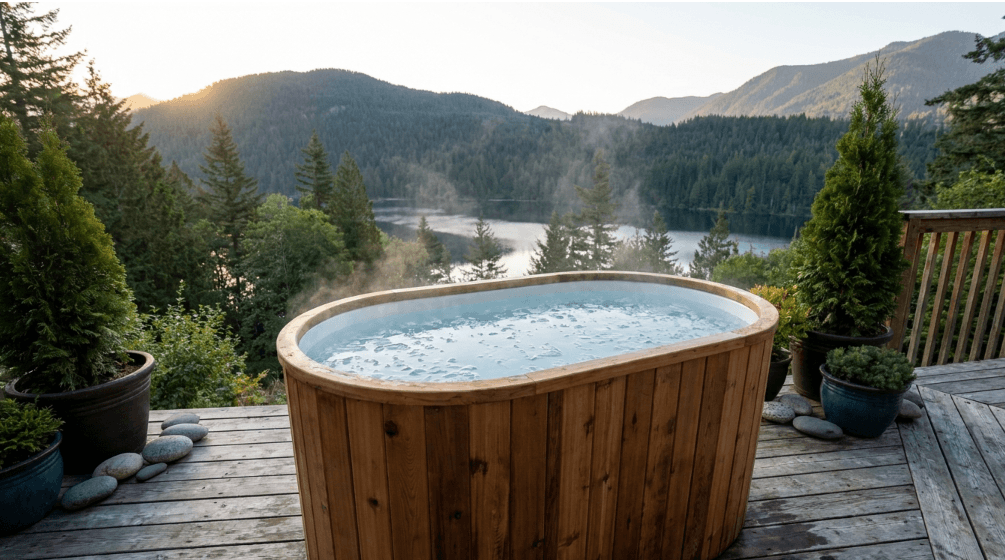
A single-person cold plunge tub needs about 3 to 5 square feet of floor space plus 12 to 24 inches of clearance around the chiller, which fits into a spot roughly 6 by 6 feet including room to step in comfortably. That is smaller than most people assume, and it means a cold plunge fits into far more small-yard layouts than a full sauna or hot tub ever could. Five real placement scenarios cover most of the small-lot situations people actually deal with.
Setup One: The Narrow Side Yard
A side yard as narrow as 4 to 5 feet wide can work if there is a clear, level path to place the tub and enough room left over for the chiller’s airflow clearance on at least one open side. This location keeps the plunge out of sight from the main backyard, which some owners prefer, but it puts the chiller close to a property line, so checking local setback rules and being mindful of the compressor’s noise near a neighbor’s window matters more here than in an open yard. A paver base laid directly on compacted gravel is usually enough foundation for a single-person unit in this kind of tight side-yard placement.
Setup Two: The Deck-Mounted Corner
An existing deck can host a cold plunge in a corner, provided a contractor confirms the joist spacing and load rating against the filled weight, which runs 700 to 1,200 pounds for a single-person unit with its chiller. Reinforcing a deck section to carry that load, when the existing framing is not already rated for it, typically costs a few hundred dollars in additional lumber and labor. This setup works well for anyone whose only flat, accessible outdoor space is an elevated deck rather than ground-level yard, and it keeps the plunge close to a door for easy access after a workout.
Setup Three: The Compact Patio Corner
A patio corner, even one already partly filled with outdoor furniture, can usually absorb a single-person tub if roughly 6 by 6 feet of the space can be dedicated to it. Positioning the unit against a wall or fence on one side, with the required chiller clearance on the remaining open sides, is a common way to fit a plunge without giving up the whole patio to it. A retractable or fitted cover keeps the tub visually tidy between uses, which matters more on a small, visible patio than it would in a larger, more spread-out yard.
Setup Four: The Converted Garage or Basement Corner
For yards too small or too shaded to place a unit outdoors at all, a garage or basement corner is a realistic alternative, provided there is a floor drain or a clear plan for water disposal during drains, adequate ventilation since the chiller generates heat and needs airflow, and a GFCI-protected circuit nearby. This indoor option sidesteps yard-size constraints entirely and adds weather protection, though it does add ventilation and drainage requirements that an outdoor placement does not have to solve.
Setup Five: The Shared Walkway or Alley Access Spot
Homes with a narrow shared walkway between the house and a fence, or an alley-facing strip along a garage, sometimes have just enough width for a single-person tub tucked against the structure, provided local code allows equipment placement that close to a walkway used for access. This spot works best when the tub does not block emergency egress from a door or gate, since some jurisdictions have specific clearance rules for anything placed along an access path. It also tends to be one of the coolest, most shaded spots on a property, which can reduce how hard a chiller has to work in warmer months since it is not fighting direct afternoon sun on the cabinet.
What Actually Limits Placement More Than Square Footage?
In nearly every small-lot situation, the real constraint is the chiller’s airflow clearance and local setback or noise rules, not the tub’s physical size. A tub alone fits into a genuinely small footprint, but boxing the chiller in against a wall or fence to save space shortens its working life and can violate a property line setback rule in some municipalities. Measuring for the chiller’s clearance first, then fitting the tub around that requirement, avoids the most common small-yard placement mistake. A quick call to a local building or zoning office before pouring any permanent pad is worth the ten minutes it takes, since setback rules vary enough between neighboring towns that assuming a national standard applies is itself a common error among first-time buyers working with a tight lot.
Does the Season Change Which Setup Makes the Most Sense?
A spot that works fine in a mild spring can become a poor choice once summer heat pushes the chiller to work harder, particularly in a tight, sun-exposed side yard or patio corner with limited airflow. Shaded placements, like the walkway spot or a partly covered patio corner, tend to hold up better across a full year without forcing the chiller into overtime during the hottest months. Anyone finalizing a small-yard placement in early spring should walk the spot again in mid-afternoon during summer to check how much direct sun it actually gets before committing to a permanent pad.
How Should Someone Compare Unit Sizes Before Committing to a Spot?
Single-person units vary in footprint even within that category, and confirming exact dimensions against a measured spot, rather than a rough estimate, prevents an expensive delivery-day surprise. Buyers working with a genuinely tight space can compare footprint, chiller clearance requirements, and available sizes across current models in the SweatDecks catalog and similar specialty retailers before settling on which of these five setups actually fits.
Frequently Asked Questions
What is the smallest footprint a cold plunge realistically needs? A single-person tub needs roughly 3 to 5 square feet, plus 12 to 24 inches of chiller clearance, so a spot as small as about 6 by 6 feet usually works.
Can a cold plunge sit on an apartment balcony? Sometimes, if the balcony supports 700-plus pounds filled and the building allows it, but a management office or engineer should confirm load capacity first.
Does a narrow side yard work for a cold plunge? Often yes, if there is enough width for the tub plus chiller clearance and a clear delivery path, though noise and setback rules near a fence matter.
Is an indoor cold plunge in a garage or basement a realistic option? Yes, provided there is a floor drain or water disposal plan, adequate ventilation, and a GFCI-protected circuit.
References
- Effects of cold-water immersion on health and wellbeing: A systematic review and meta-analysis, PLoS One, 2025
- Effects of cold water immersion after exercise on fatigue recovery and exercise performance: meta analysis, Frontiers in Physiology, 2023
- Cold-water immersion (cryotherapy) for preventing and treating muscle soreness after exercise, Cochrane Database of Systematic Reviews, 2012